select
a hob-integrated extractor that shrinks its own suction area to clean the air only where you are cooking, quieter, and more efficient
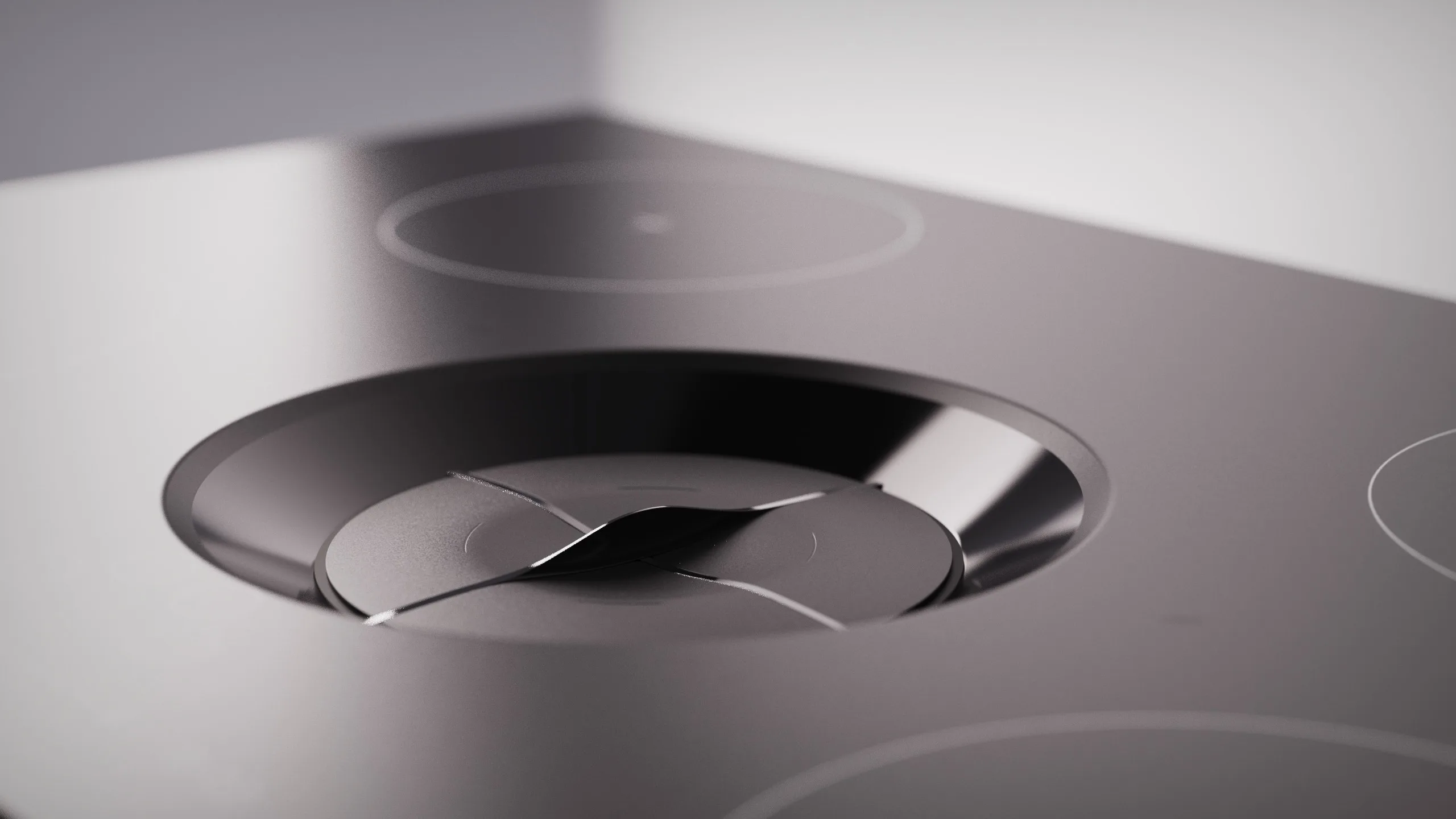
Select is a flow-in extraction system built directly into the hob. Instead of running a large hood at full power over the whole cooktop, it concentrates suction on the zone actually in use, pulling harder over a smaller area, so it extracts more while drawing less power and making less noise.
At its core, the project asks how direct interaction between user and appliance can make cooking both more intuitive and more efficient: the cook opens and closes the extraction where they need it, and the system tunes its performance to match.
Final Project Work · Group project In collaboration with: Midea
Team: Alessandro Basiaco, Lorenzo Caporali, Carlo Giusti, Francesco Milana Politecnico di Milano — Design & Engineering (MSc) Location: Milan, Italy 2024
Supervised by: Matteo Oreste Ingaramo, Federico Maria Elli, Paolo Faraldi, Michele Carboni, Stefano Petrò
My contribution: preliminary research and ideation, 3D modeling, engineering, Rendering
01
process
Reading the Market
Research ran in parallel with a field survey, focused deliberately on recirculating flow hoods: the direction the market is likely to take as rules on fume exclusion grow stricter. Conversations with showroom staff added a view of what customers actually look for at the moment of purchase.
One trend stood out. The kitchen has become the mirror of the home: increasingly an open, airy space built around an island and lived in well beyond mealtimes. That shift explains the rise of the hob with an integrated hood: buyers will trade a little storage for a visually freer, unobstructed worktop, and value how simply an all-in-one product installs.


The User
We designed for a dynamic kitchen: the kind where a recipe unfolds in stages and pots and pans move constantly across the hob. For that cook, flexibility is efficiency: an extractor that regulates its motor intelligently draws less energy, lowers its environmental footprint, and, crucially in an open-plan room, stays quiet enough to live alongside.
The Counter-Brief
From this, the brief was reframed. Select would let the suction point itself be varied, multiplying its configurations through direct interaction with the user; it would cut footprint and noise with no loss of extraction efficiency; and it would treat installation and maintenance as first-class design problems.
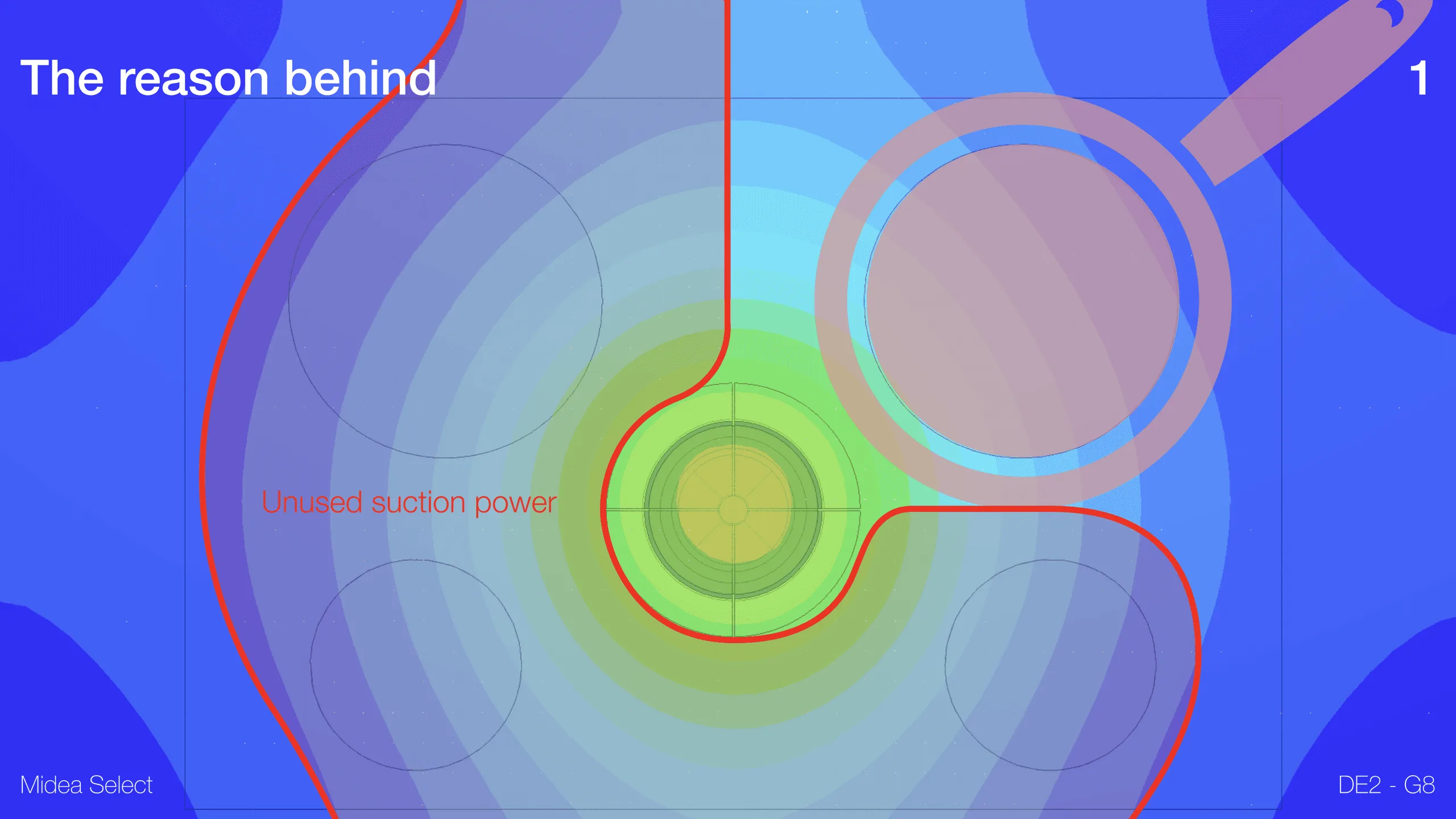
How might we let a hood extract only where cooking is actually happening and stay quiet enough to live with in an open kitchen?
Proving the Principle
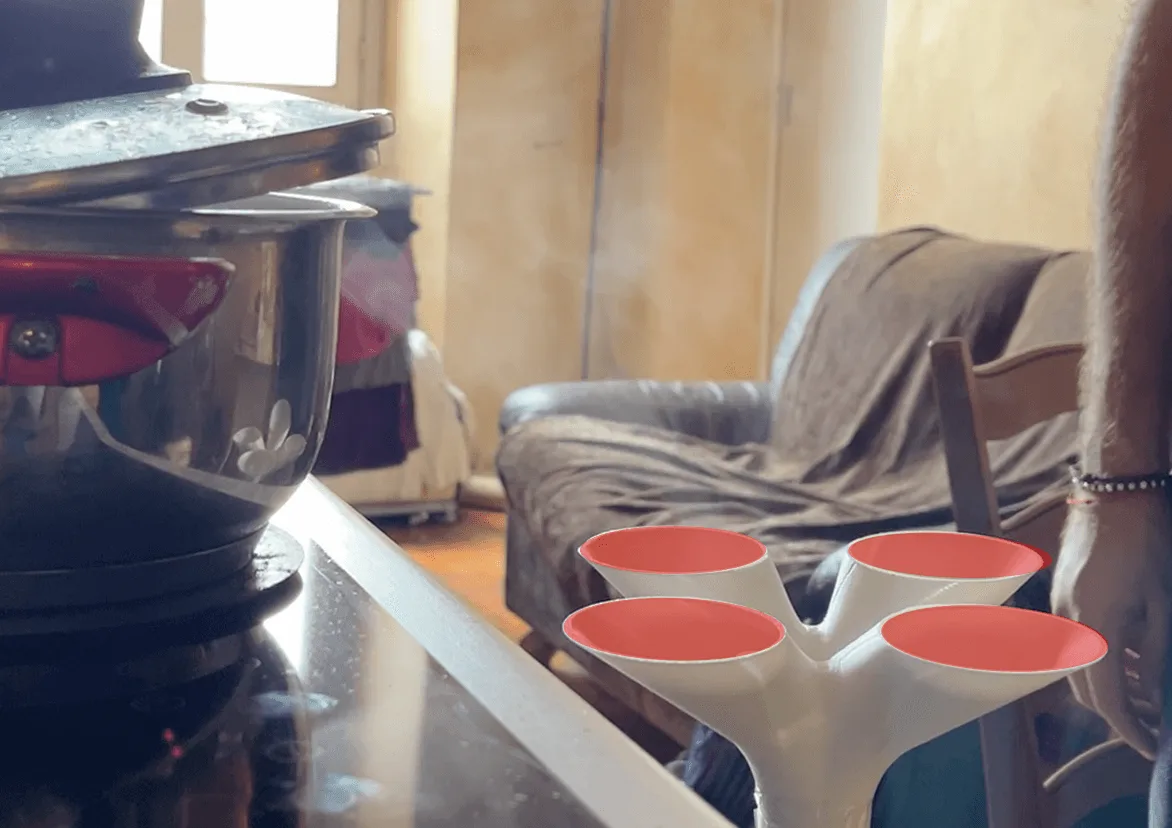
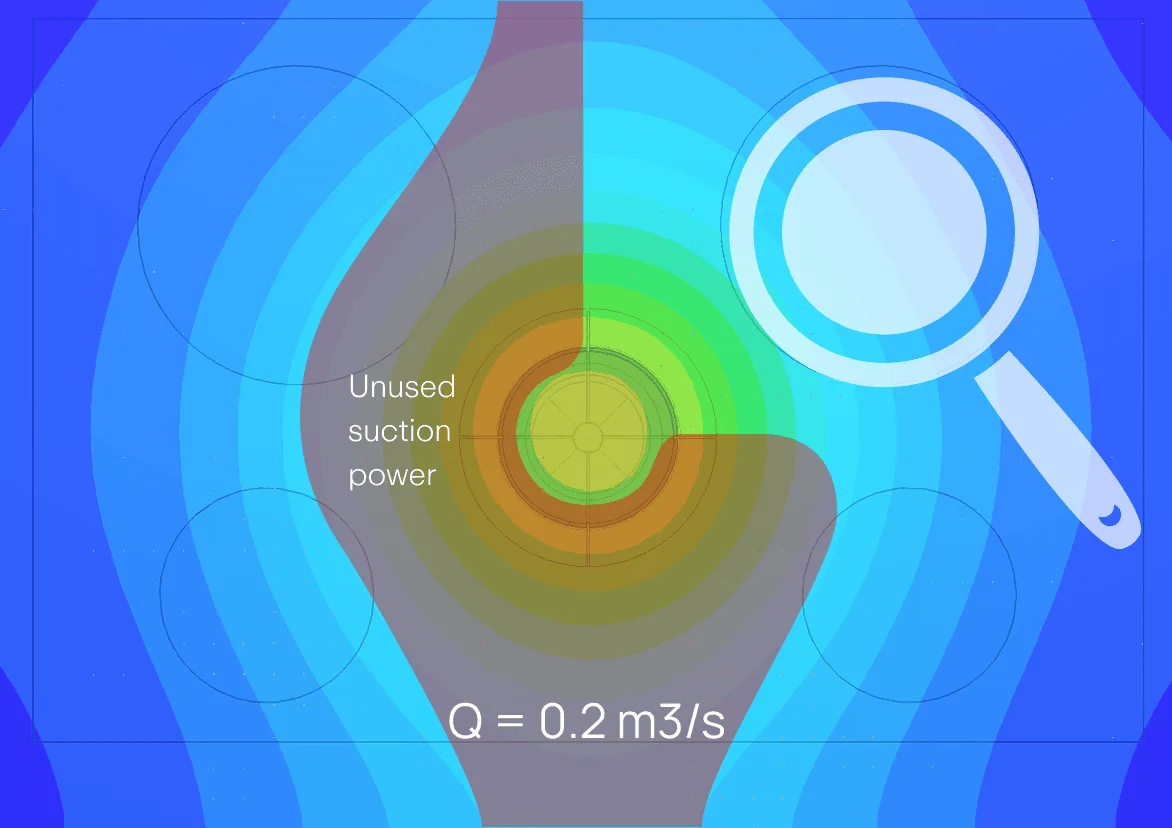
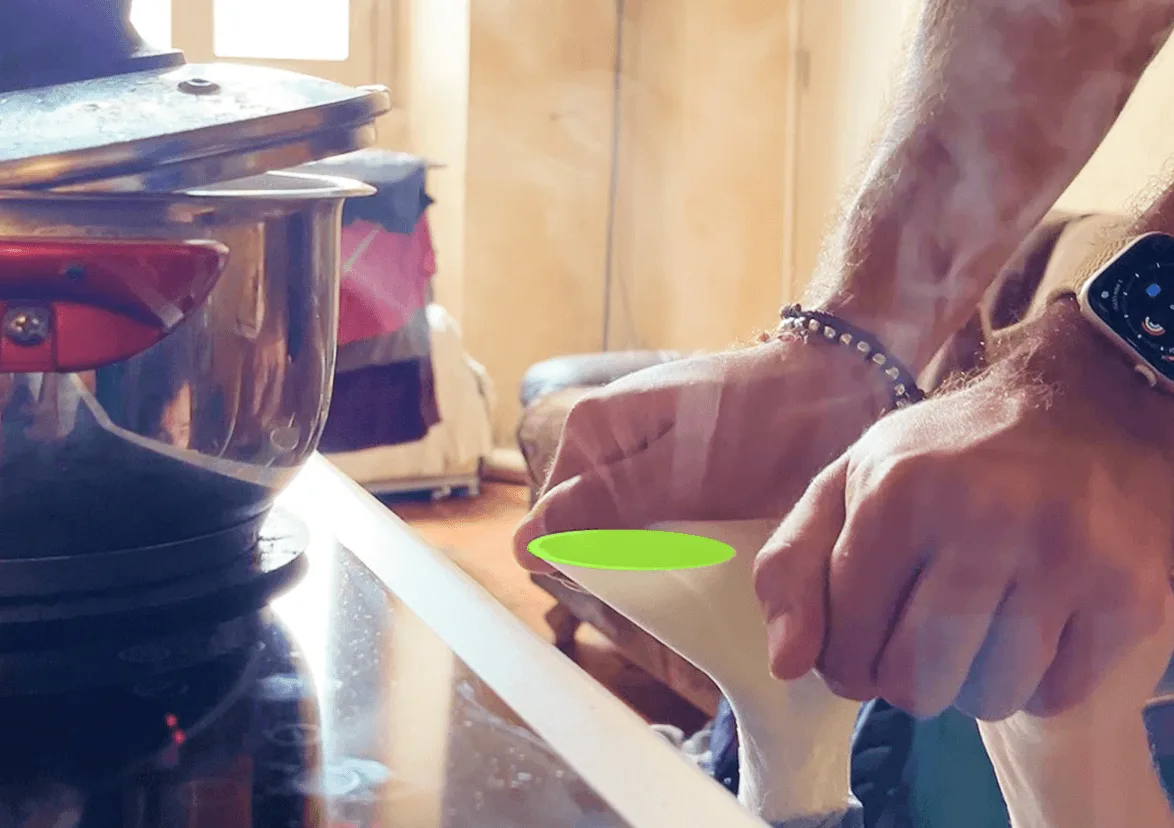
The central idea was tested early and crudely: a vacuum cleaner connected to the base of two simple prototypes, used to watch how the airflow behaved as we changed two variables; the tilt of the inlet nozzle, and the size of the suction area. Tilting the nozzle changed little. Shrinking the area changed everything: reducing the opening from the full surface down to a quarter concentrated the pull dramatically, raising the local air velocity and sharply improving the extraction. That single relationship, less surface, more flow, became the engine of the whole project.

02
final design
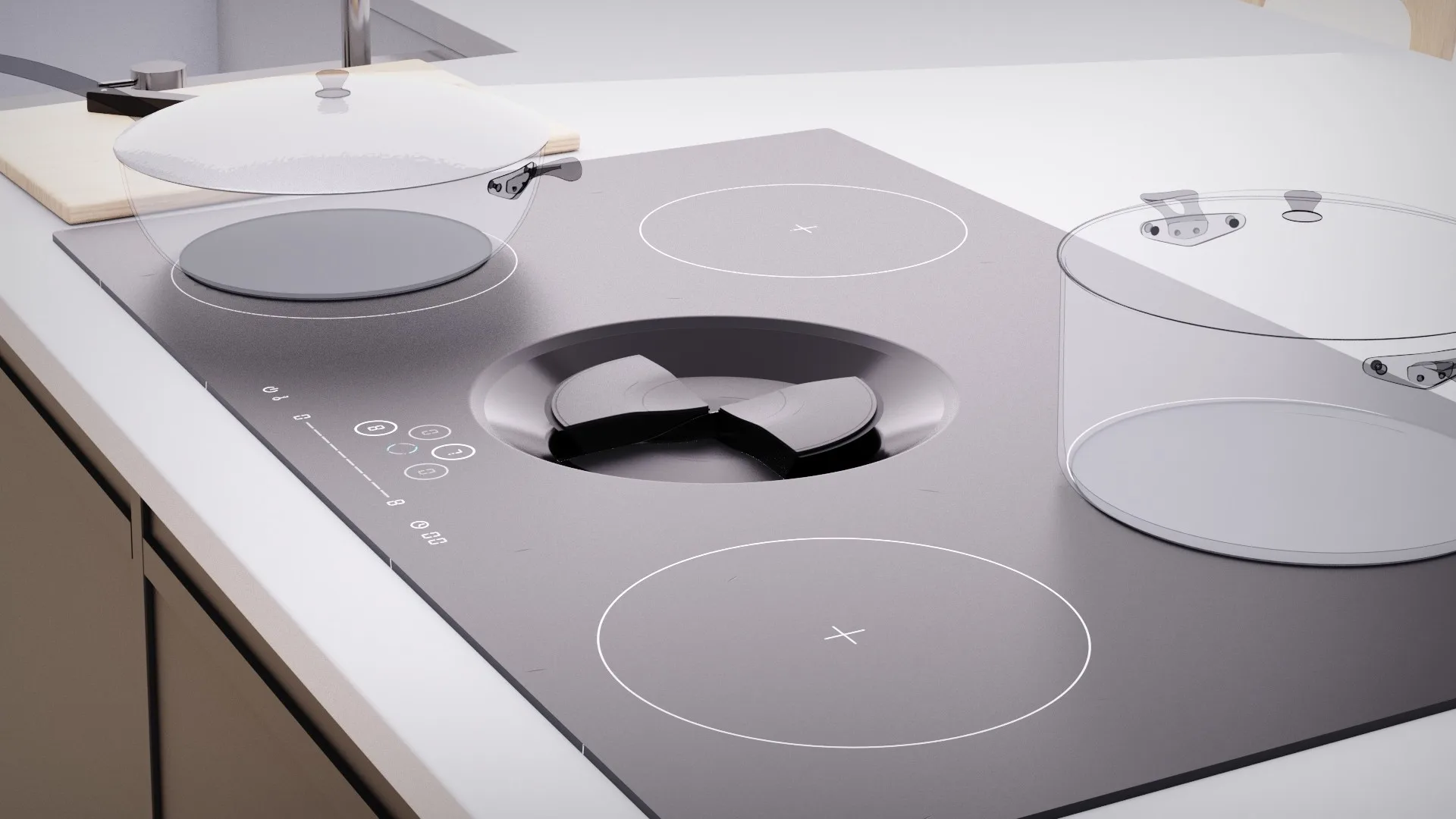
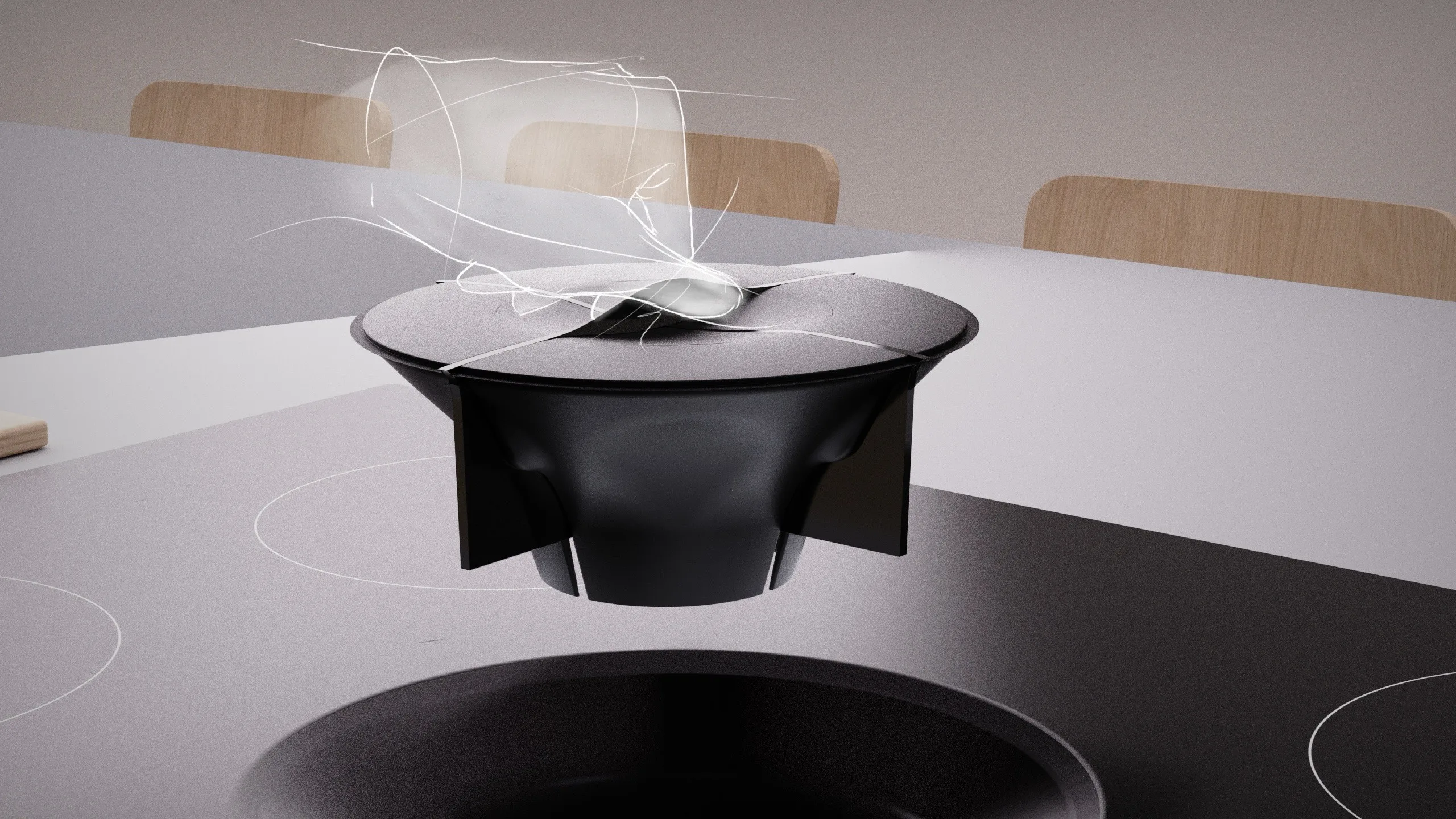
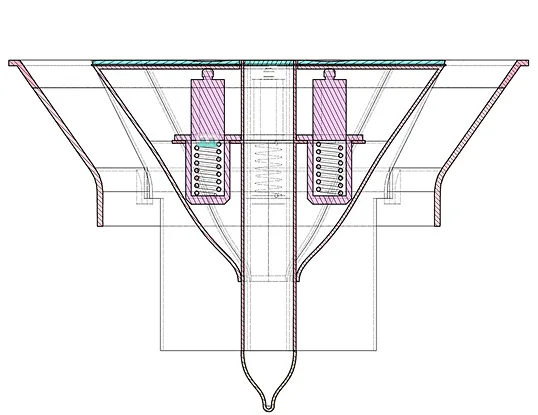
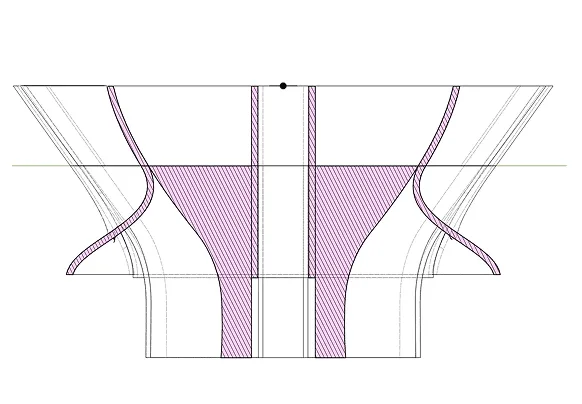
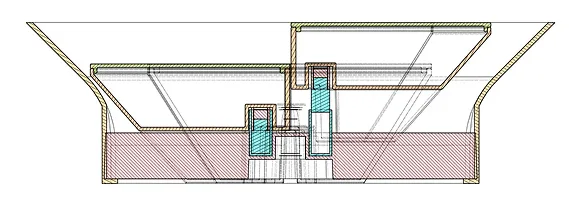
Select is an integrated hood that extracts selectively from any of the four cooking zones. An up-down mechanism lets the user grow or shrink the active suction area by hand: as the area contracts, the air velocity through it rises, localising the pull exactly where it is wanted. The motor can then be eased off to counterbalance that gain; the single move that delivers Select's core promise of higher efficiency and lower noise at the same time.
A Layout Built Around the Arm
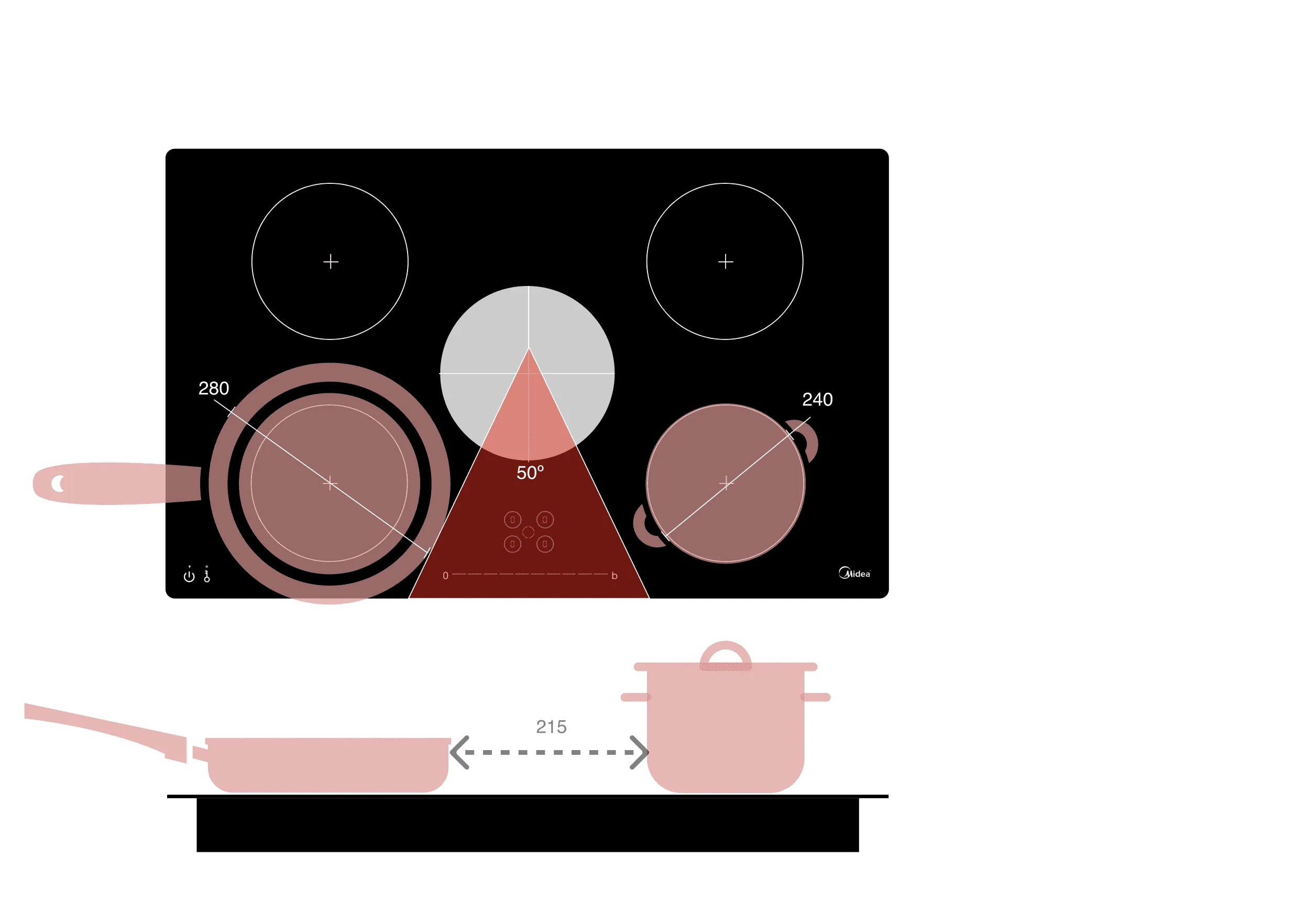
Because the product is worked by hand, it had to keep the user's forearm well clear of hot pans and rising vapour, no "hot slalom" across the hob. The cooktop layout was reworked to solve this: the nozzle sits closer to the cook, and the two front cooking zones are pushed outward from the central axis. Together these open up the clearance angle for the arm and widen the gap between the front pans (roughly 215 to 250 mm), making the interaction safer and more comfortable. The zones themselves were dimensioned around real cookware: a 24 cm pot, a 28 cm pan, so the geometry holds up in daily use.
Choosing the Mechanism
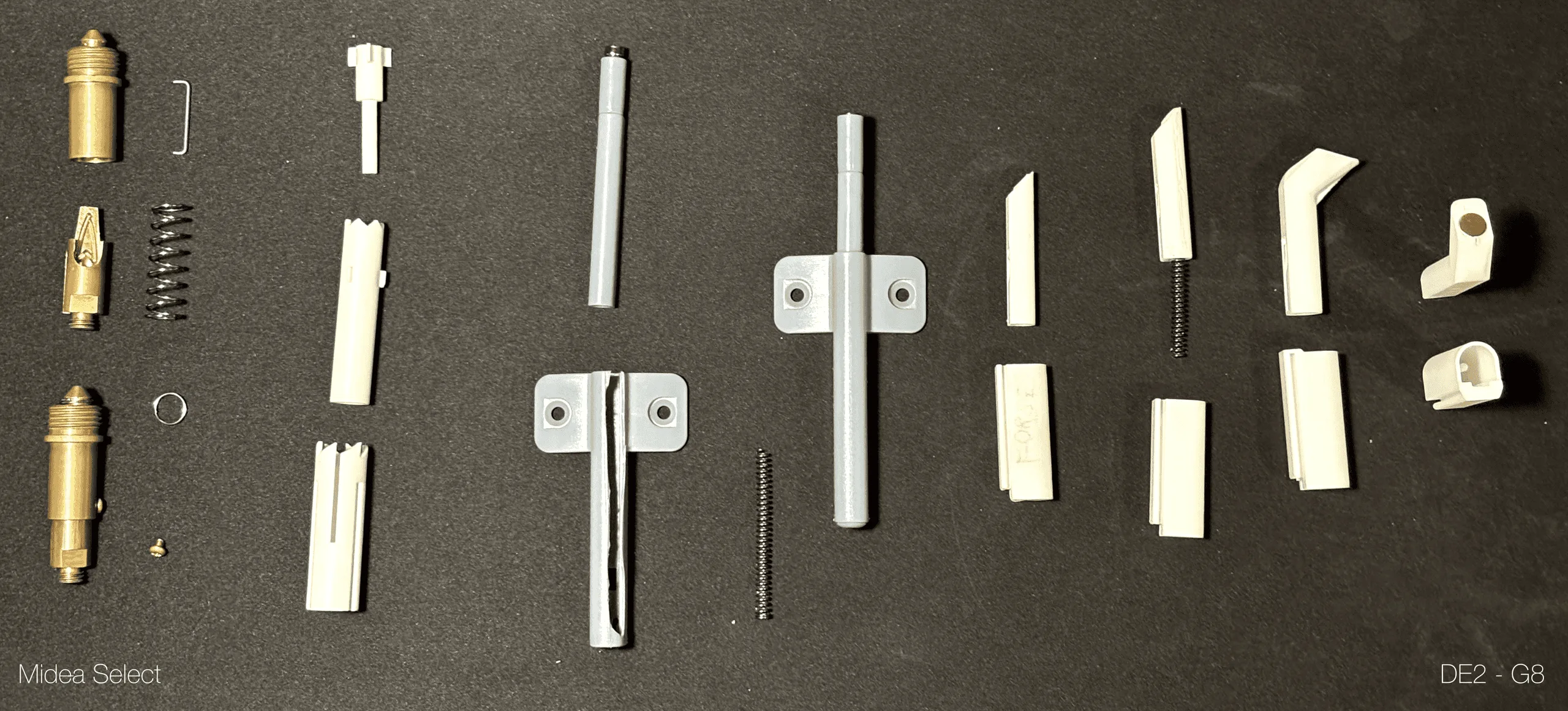
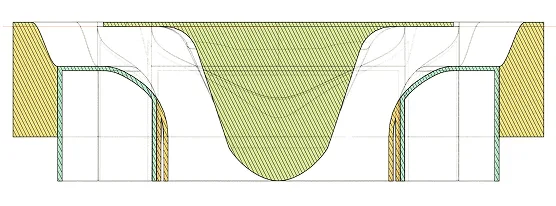
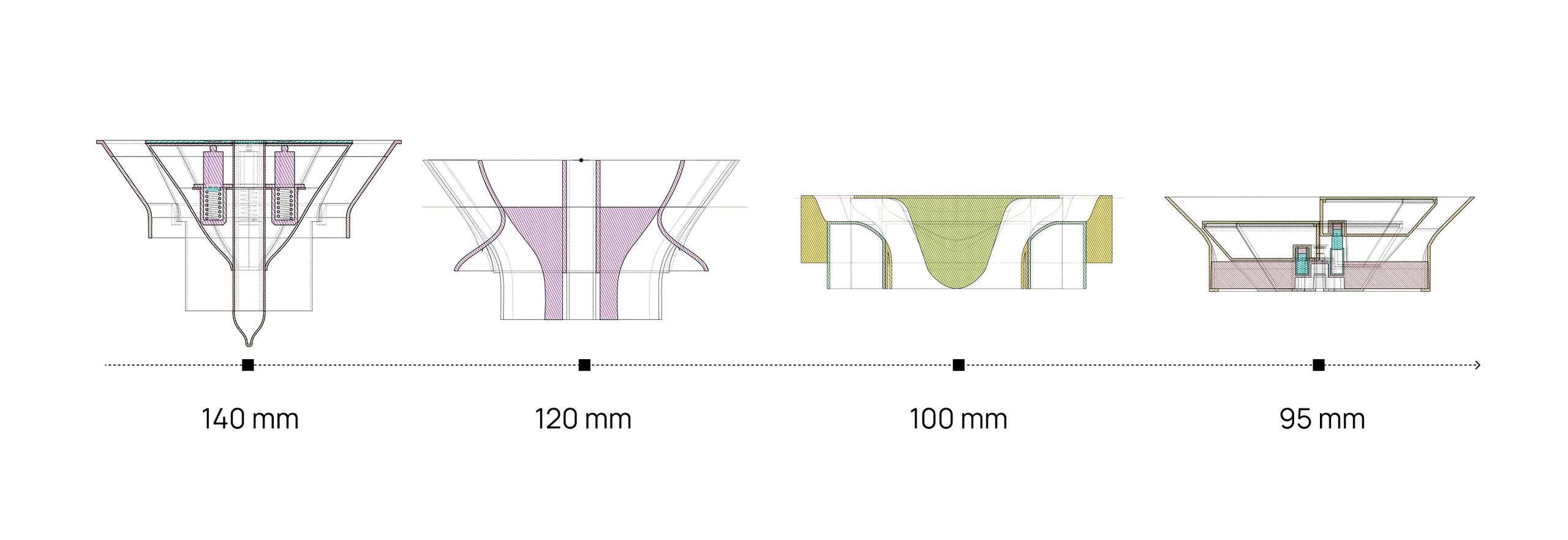
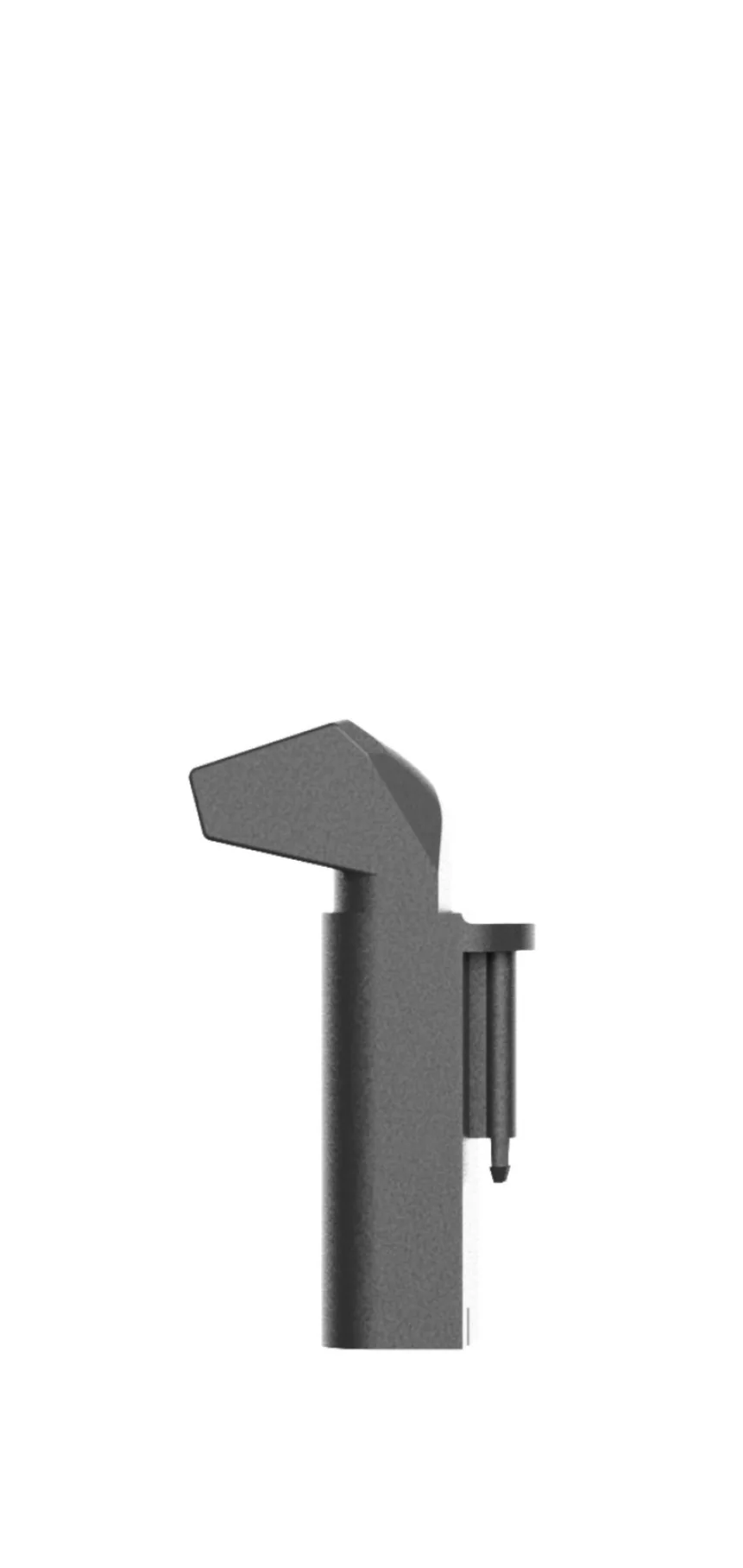
If the suction area had to open and close, it needed a mechanism to move the four quadrants reliably. We started from the sink-stopper principle, then ran a head-to-head between a pop-up sink mechanism and a click-pen mechanism, 3D-printing and testing both. The sink pop-up won on the parameters that mattered: sealing, simplicity and manufacturability. To trim the footprint further, we then borrowed from the pop-up hinge of a furniture door: lighter and more compact than either.
Placing It Well
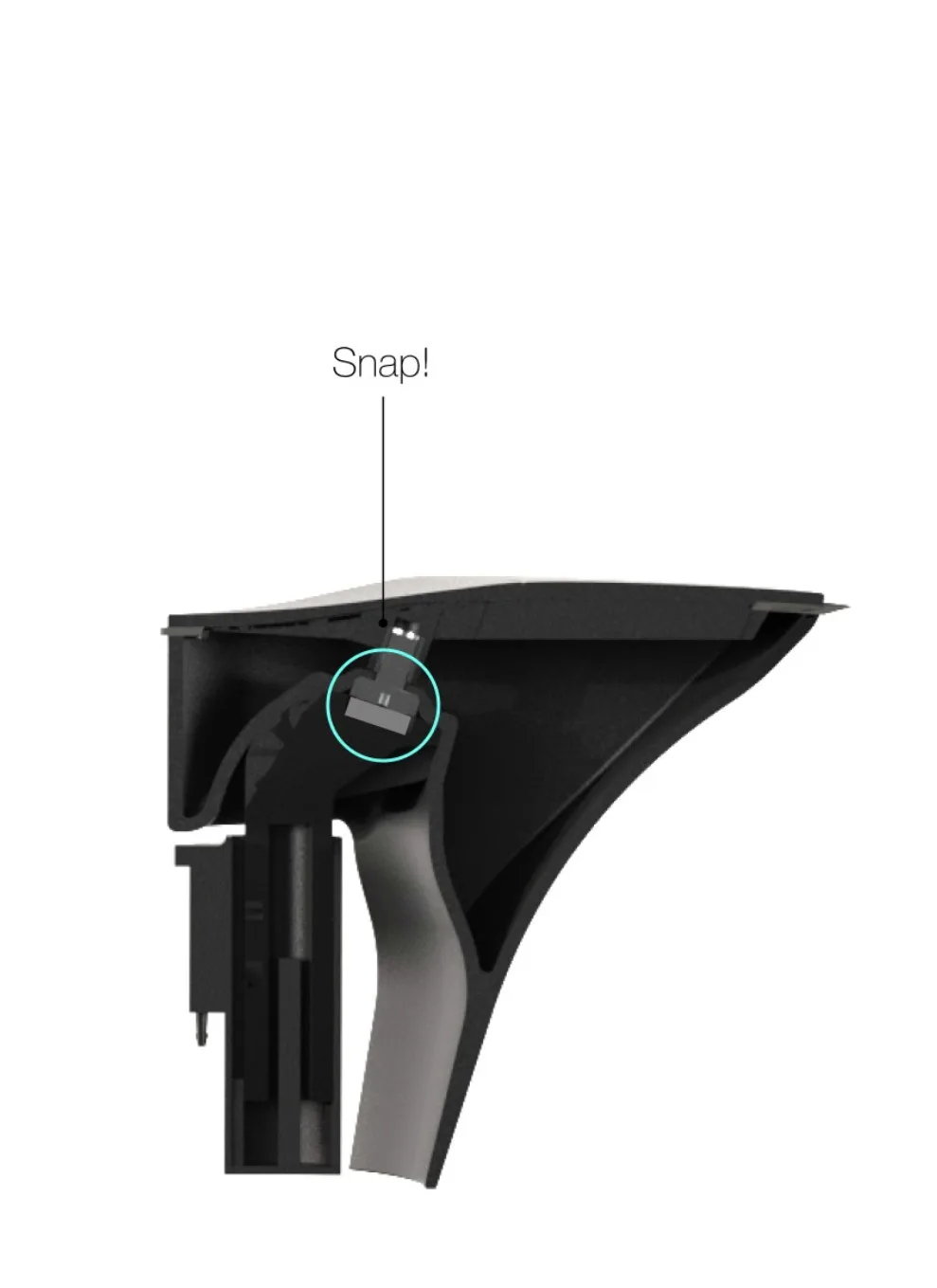
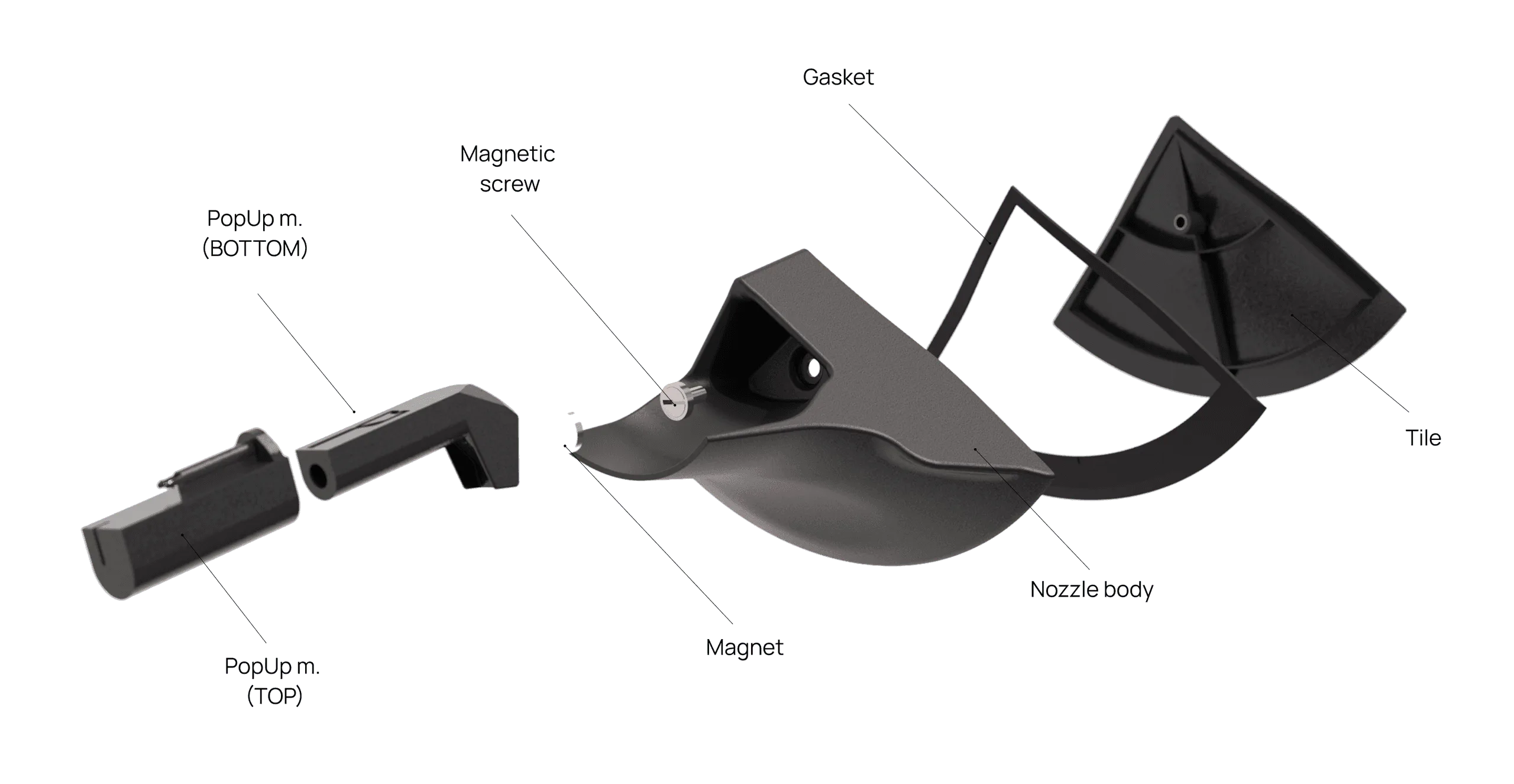
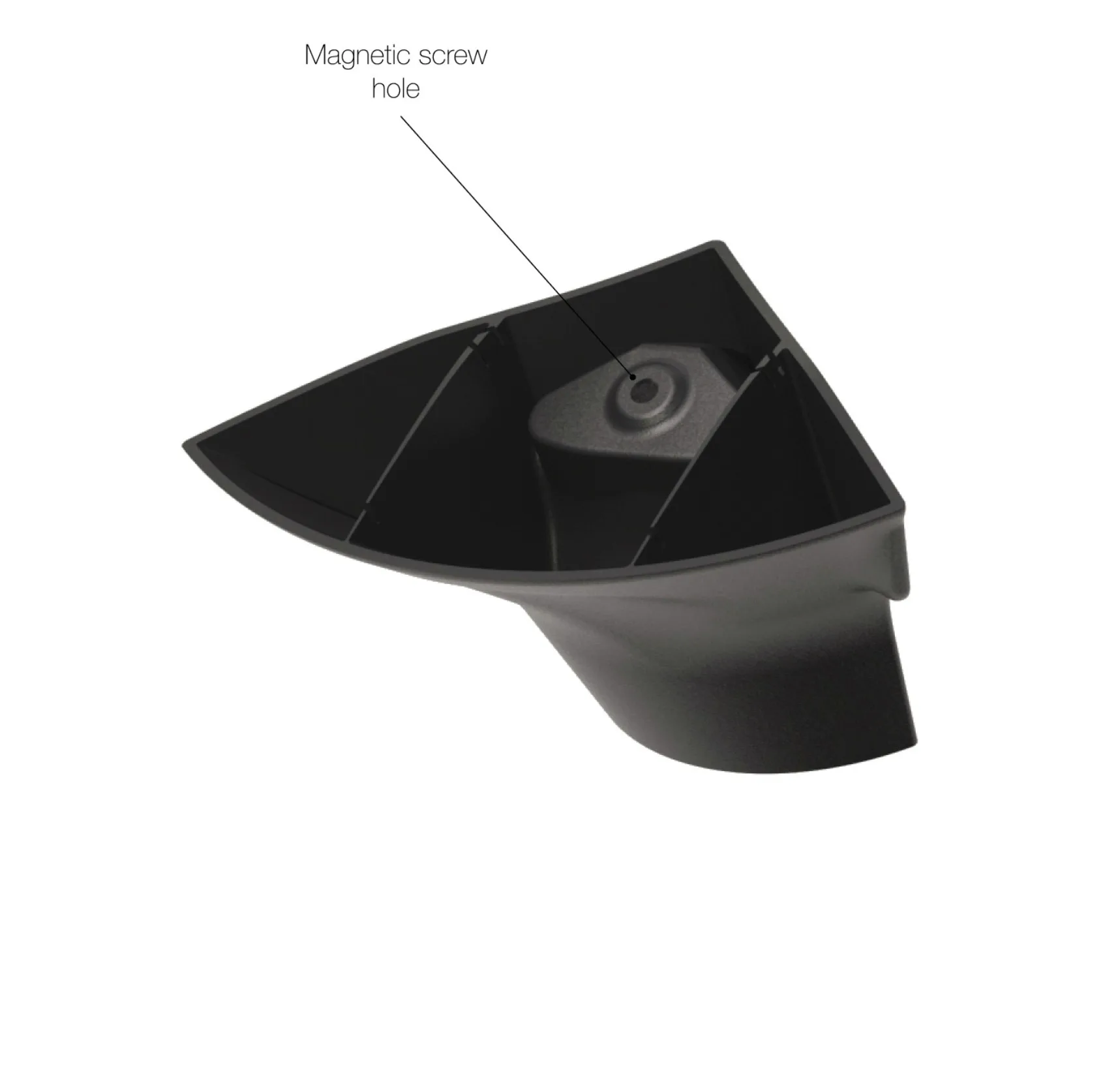
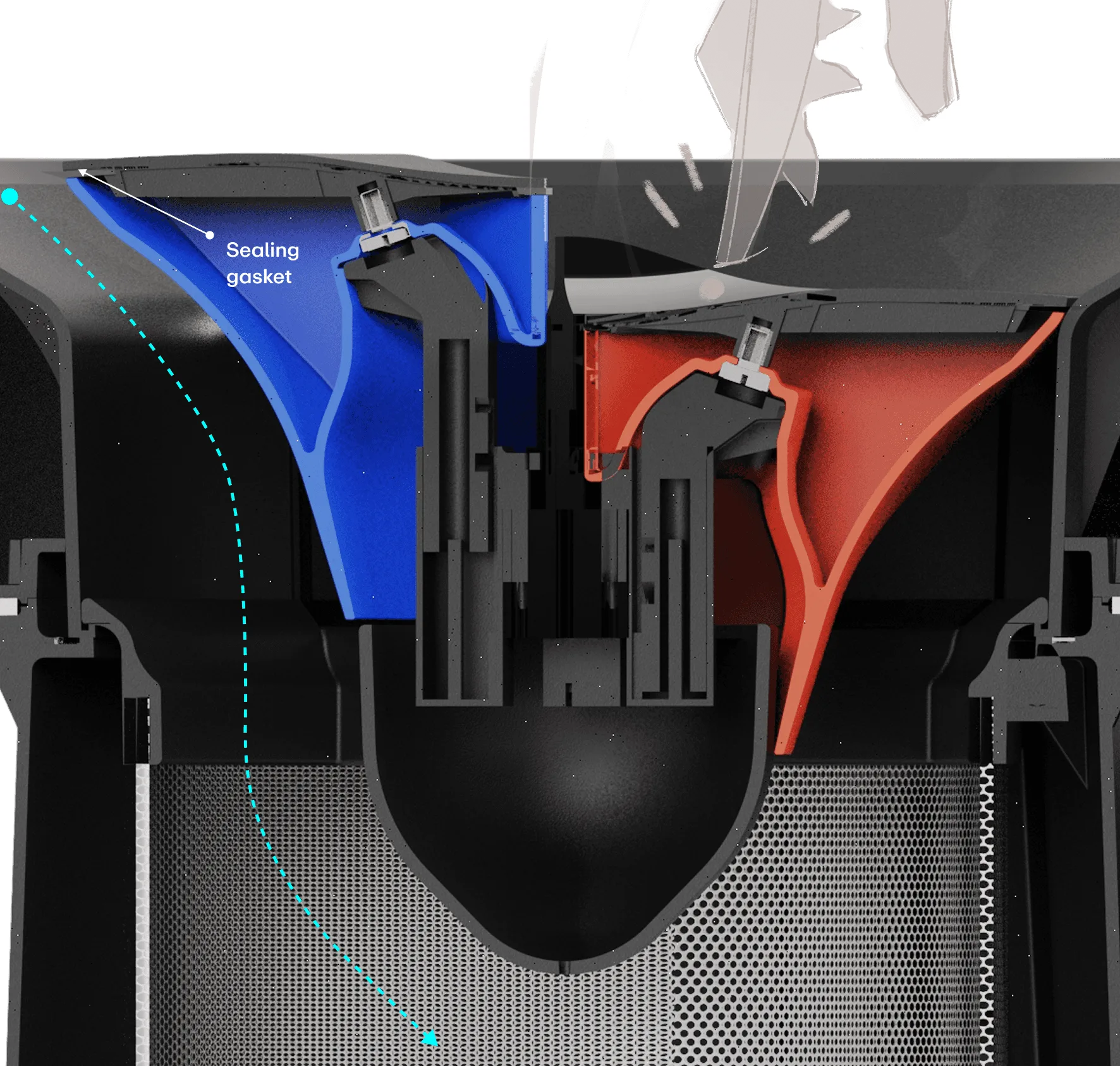
Where the mechanism sat proved as important as which one it was. Housed inside the petals, it got in the way of cleaning, replacement and maintenance; relocated beneath the four nozzles, it resolved all three at once. Separated from the sealing elements, it comes apart cleanly; slotted into a simple guide rather than screwed to the frame, it lifts out for replacement; and joined to the sealing element by heat-resistant magnets, it disassembles in a fast, satisfying snap.
Magnetic, Dishwasher-Safe
Cleaning drove the construction. The goal was simple: every removable part dishwasher-safe, and the materials, snaps and geometries were all chosen to reach it. Heat-resistant magnetic snaps let the petals lift off the frame in a moment for routine cleaning, while the frame itself, extruded in aluminium, drops straight into the dishwasher. Closed, the four quadrants seal into a single continuous surface, with none of the grilles or grids where grease and dirt usually hide.
The Drop Grip
At the centre of each nozzle sits a drop-shaped grip that quietly does two jobs. It gives the user a clear point to lift the extrusion and petals out of the duct and, being a thin, delicately curved sheet of metal, it signals its own fragility, discouraging anyone from resting a heavy or hot pan on top of it. Form communicating use, without a word of instruction.
A System That Reads Itself
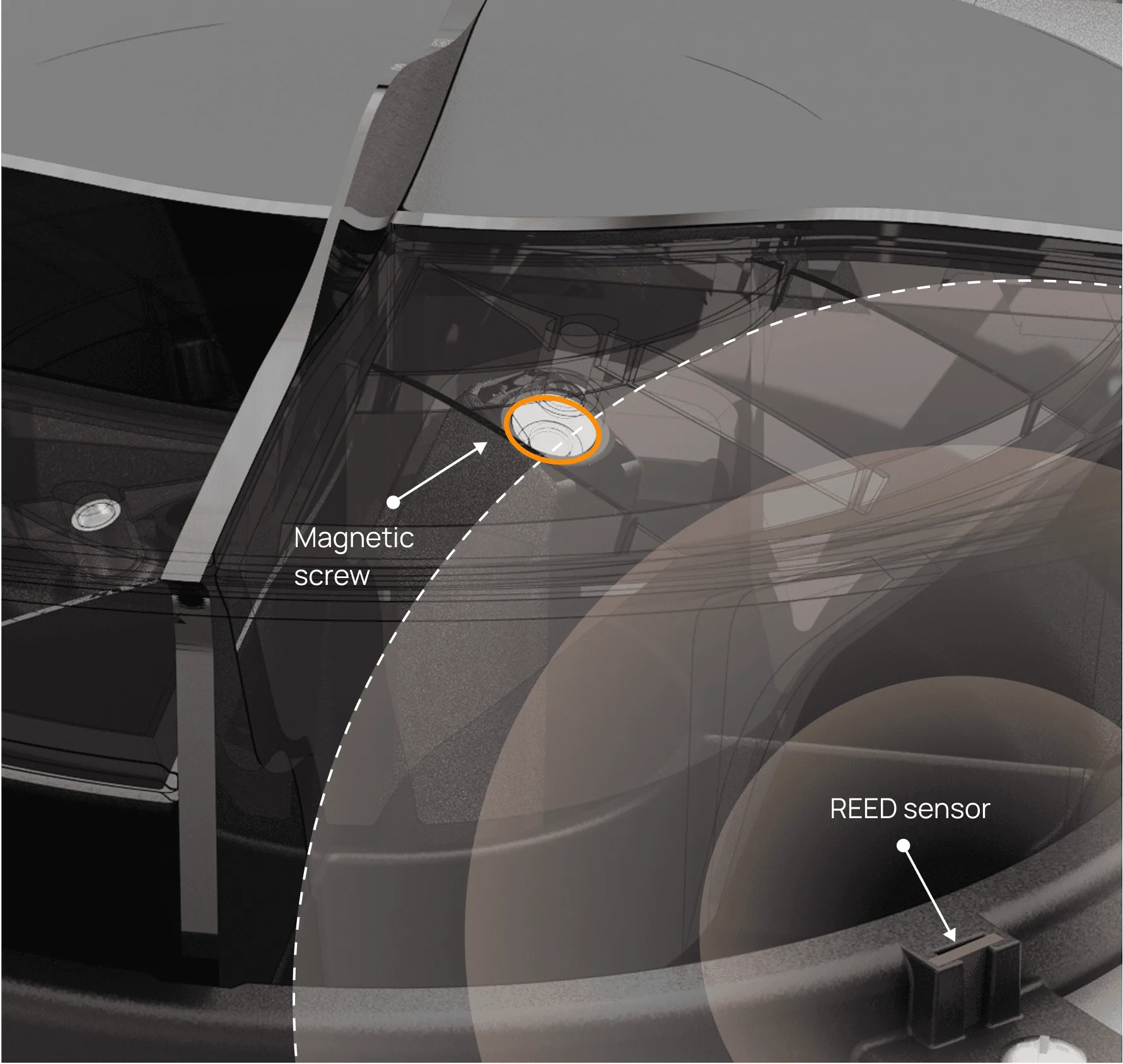
The same magnets that hold each petal in place do a second, quieter job: they tell the appliance what it is doing. Beneath every nozzle, a reed sensor picks up the magnet's field and registers whether that petal is raised or lowered, so the system always knows, in real time, which quadrants are open and how large the active suction area really is. That reading goes straight to the motor, which sets its power to match: full draw for four pans at once, or dialled right down when suction is concentrated on a single zone. The governing principle: less surface, more flow, less motor; is no longer something the cook has to manage. The hood reads its own configuration and manages it for them.